Table of Contents
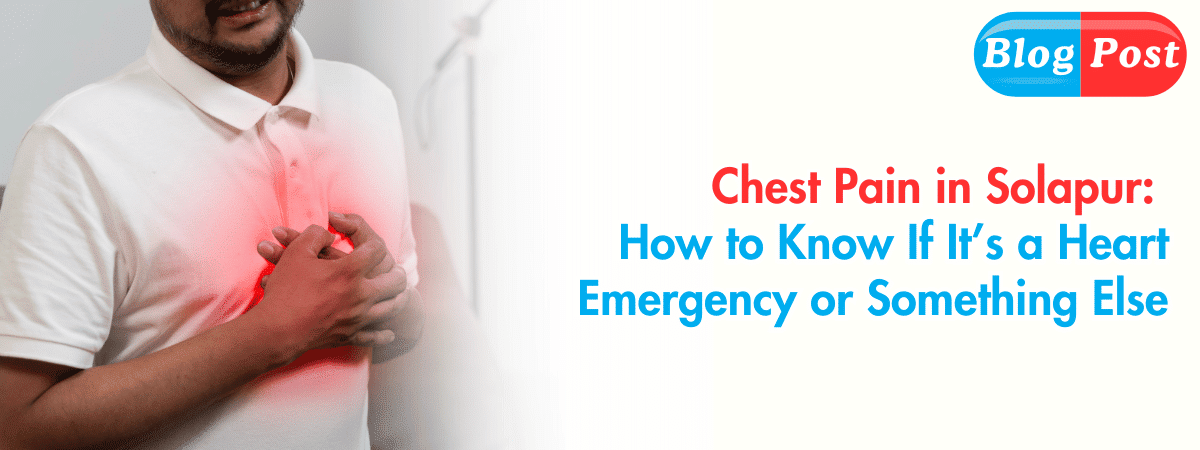
Chest pain can be frightening—and for a good reason. Sometimes it’s acidity or muscle strain. But sometimes, chest pain is your body’s urgent warning of a heart attack or another serious condition that needs immediate medical attention.
If you or a family member has new, unexplained, severe, or recurring chest pain in Solapur, the safest approach is: do not self-diagnose. Get evaluated early. Major health authorities advise urgent emergency help for chest pain that does not go away, spreads to other areas, or comes with sweating, nausea, dizziness, or shortness of breath.
In this in-depth guide, you’ll learn how to:
- Identify heart emergency warning signs
- Understand common “non-heart” causes of chest pain
- Know when to rush to hospital vs when to book a routine visit
- Understand what tests doctors commonly do
- Reduce risk factors like BP, diabetes, smoking, and cholesterol
Important: This article is educational and not a substitute for emergency evaluation. If chest pain is severe, new, or worsening—seek urgent medical care immediately.
1) What Chest Pain Can Feel Like (and Why It’s Confusing)
Chest pain is not one single sensation. People describe it as:
- Pressure, tightness, squeezing
- Burning (like acidity)
- Sharp stabbing pain
- Heaviness in the chest
- Discomfort radiating to arm, jaw, neck, back, or stomach
The key point: heart-related pain doesn’t always feel dramatic. It can come and go, feel mild, or be confused with indigestion—especially in older adults, diabetics, and women.
That’s why medical guidance is clear: new or unexplained chest pain should not be ignored.
2) When Chest Pain Is a Heart Emergency
Chest pain is considered a possible heart emergency when it suggests:
- Heart attack (myocardial infarction)
- Unstable angina (reduced blood flow to the heart)
- Dangerous arrhythmia-related events
- Severe heart failure / cardiac shock
Heart organizations emphasize: if chest discomfort is sudden, severe, new, worsening, or accompanied by other symptoms—call emergency help immediately because it could still be a heart problem even if it turns out not to be.
“High-risk” chest pain features
Treat chest pain as urgent if:
- It lasts more than a few minutes or returns repeatedly
- It feels like pressure/squeezing/heaviness
- It spreads to arm(s), jaw, neck, back, or stomach
- It comes with shortness of breath, sweating, nausea, lightheadedness, or unusual fatigue
3) Heart Attack Symptoms You Must Know
A heart attack happens when blood flow to a part of the heart is blocked. Symptoms can vary, but common warning signs include:
Classic warning signs
- Chest discomfort (pressure, squeezing, fullness, or pain)
- Shortness of breath (with or without chest discomfort)
- Pain or discomfort in arms, back, neck, jaw, or stomach
Additional symptoms
- Cold sweat
- Nausea or vomiting
- Dizziness/lightheadedness
- Unusual fatigue (sometimes more common in women)
Important: Some people—especially diabetics and elderly—may have a “silent” or atypical presentation. That’s why early evaluation is always safer than delay.
4) Chest Pain That Is NOT Heart Attack (But Still Needs Care)
Not all chest pain is a heart attack. But some non-heart causes can also be serious. Here’s how doctors think about it:
A) Lung-related causes
- Pneumonia
- Severe asthma/COPD exacerbation
- Pneumothorax (collapsed lung)
- Pulmonary embolism (blood clot in lungs) — medical emergency
If chest pain is paired with breathlessness, wheezing, low oxygen, or sudden worsening—seek urgent care.
If you often have breathlessness or COPD-like symptoms, you may also find this relevant: ARDS & Ventilator Care (severe lung failure scenarios and ICU care).
B) Stomach/food pipe causes
- Acid reflux/GERD
- Gastritis
- Esophageal spasm
This can feel like burning pain and can mimic heart pain—so don’t assume it’s “only acidity” if symptoms are severe or new.
C) Muscle and rib cage causes
- Costochondritis (inflammation of rib cartilage)
- Muscle strain after gym/work/coughing
This pain is often sharp and worsens with movement or pressing on the area—yet urgent evaluation may still be needed if uncertain.
D) Anxiety/panic symptoms
Anxiety can cause chest tightness, palpitations, and breathlessness. But anxiety is a diagnosis doctors make after ruling out medical emergencies—not before.
E) Heart inflammation (needs evaluation)
Pericarditis can cause chest pain and sometimes needs urgent assessment.
5) Quick Self-Check: Red Flags vs Lower-Risk Clues
This section helps families decide urgency—but remember: when in doubt, treat it as urgent.
Red flags (rush to hospital)
- Chest pressure/tightness/heaviness
- Pain radiating to left arm/jaw/back
- Breathlessness, sweating, nausea, fainting, or severe weakness
- Sudden severe pain that doesn’t settle
- Known heart disease + new chest pain
Lower-risk clues (still needs doctor visit if persistent)
- Pain clearly linked to movement/touch
- Pain lasting seconds only and not recurring
- Mild acidity-like burning that improves with antacids (but not always reliable)
Rule: If pain is new, scary, or you are unsure—don’t take chances.
6) Who Is at Higher Risk for Heart Emergencies in Solapur?
In real practice, chest pain is more likely to be serious if you have:
- High blood pressure
- Diabetes
- High cholesterol
- Smoking/tobacco use
- Obesity
- Family history of heart disease
- Age above 40
- Stress + sedentary lifestyle
Even if symptoms are mild, high-risk patients should seek evaluation early.
For overall prevention and risk control, this page is highly relevant: General Medicine & Lifestyle Disease Management in Solapur.
7) How Doctors Evaluate Chest Pain (What to Expect)
When you reach a hospital or a physician, the goal is to quickly rule out dangerous causes first.
Step 1: History + vitals
- When did it start? What triggers it?
- BP, pulse, oxygen saturation, temperature
- Risk factors (diabetes, BP, smoking)
Step 2: ECG (EKG)
ECG is one of the first tests done to detect heart rhythm problems or signs of reduced blood flow.
Step 3: Blood tests (cardiac markers)
Troponin and related tests help detect heart muscle injury.
Step 4: Chest X-ray
Useful for lung infections, fluid overload, or pneumothorax suspicion.
Step 5: 2D Echo (if needed)
A 2D echocardiogram helps assess heart pumping function and structural issues.
Step 6: Additional testing based on suspicion
Doctors may suggest further imaging or specialist referral depending on findings.
8) What to Do While Going to the Hospital
If chest pain suggests a heart emergency:
- Don’t drive yourself if you feel faint or unstable
- Don’t “wait and watch” if symptoms are worsening
- Keep previous reports/medications ready if possible
- If diabetic/hypertensive, inform the medical team early
Major medical guidance stresses: never ignore possible heart attack symptoms and seek emergency help right away.
9) Prevention: How to Reduce Your Risk (Simple, Powerful Steps)
Many serious chest pain emergencies can be prevented by controlling risk factors.
Focus on the basics
- Control BP and diabetes
- Check cholesterol levels regularly
- Quit smoking/tobacco
- 30 minutes of walking most days
- Adequate sleep and stress management
- Maintain healthy weight and waistline
- Follow a heart-friendly diet (less processed food, less trans fats, more fibre)
If you’re unsure where to start, a physician-led plan is often the easiest way to get consistent results—especially for people over 40.
10) When to Book an Appointment in Solapur
Book a physician consultation (instead of waiting) if:
- Chest pain keeps recurring
- You have risk factors (BP/diabetes/cholesterol/smoking)
- You have breathlessness, palpitations, or reduced exercise tolerance
- You want a structured heart-risk check
Consultation Location
Yashodhara Super Speciality Hospital – Unit 2
Solapur–Hyderabad Road, Near Market Yard, Solapur
Click here to book an appointment
Chest pain in Solapur—when should I go to the hospital immediately?
If chest pain is new, severe, doesn’t go away, spreads to the arm/jaw/back, or comes with sweating, nausea, dizziness, or breathlessness—seek emergency care immediately.
Can acidity feel like heart pain?
Yes. GERD/acid reflux can mimic chest discomfort. But because heart attacks can also feel like indigestion, new or severe pain should be evaluated first.
What are common heart attack symptoms?
Chest discomfort/pressure, shortness of breath, and discomfort in arms, back, neck, jaw, or stomach are common symptoms.
What tests are done for chest pain?
Doctors commonly do vitals, ECG, blood tests (including troponin), and sometimes chest X-ray and 2D echo based on symptoms.
Who is at higher risk of serious chest pain?
People with high BP, diabetes, high cholesterol, smoking history, obesity, family history, or age >40 are at higher risk and should not delay evaluation.
