Table of Contents
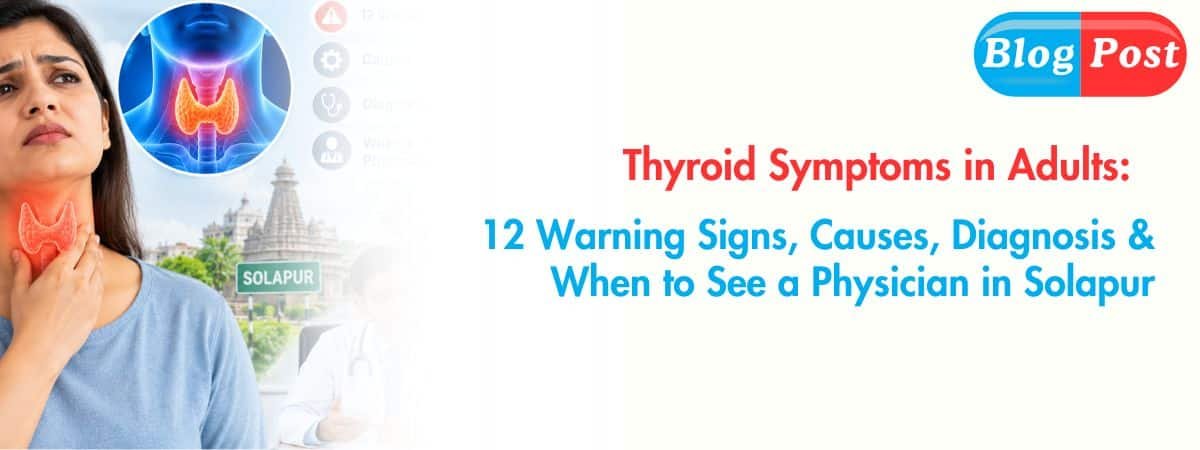
Thyroid problems can affect energy, weight, heart rate, mood, digestion, sleep, and overall health. Recognising Thyroid Symptoms in Adults early can help with timely diagnosis and treatment.
The thyroid is a small, butterfly-shaped gland at the front of the neck. It produces hormones that regulate energy use, metabolism, heart rate, body temperature, and digestion. Too little thyroid hormone causes hypothyroidism, while too much causes hyperthyroidism.
If you experience persistent fatigue, unexplained weight changes, irregular heartbeat, or neck swelling, medical evaluation can help identify the cause.
This guide explains common thyroid symptoms in adults, possible causes, diagnostic tests, treatment approaches, and when to consult a physician.
What Is the Thyroid Gland and Why Is It Important?
The thyroid mainly produces T4 and T3 hormones, while the pituitary gland regulates thyroid activity through TSH. Abnormal levels can affect heart rate, temperature regulation, weight, bowel movements, energy, concentration, and menstrual cycles.
12 Common Thyroid Symptoms in Adults
1. Persistent Tiredness and Low Energy
Persistent fatigue is common with an underactive thyroid. You may feel exhausted despite adequate sleep, have reduced stamina, muscle weakness, or difficulty starting daily activities.
Fatigue can also result from anaemia, diabetes, sleep disorders, nutritional deficiencies, infections, and other conditions. If weakness continues without a clear explanation, read about constant weakness and fatigue causes.
2. Unexplained Weight Gain
Hypothyroidism can contribute to gradual weight gain, particularly when accompanied by fatigue, constipation, cold sensitivity, dry skin, or reduced activity.
Weight gain alone does not confirm thyroid disease. Diet, physical activity, medications, hormonal changes, and other conditions can also contribute.
3. Unexplained Weight Loss Despite Normal or Increased Appetite
Hyperthyroidism can increase metabolism and cause weight loss even when appetite is normal or increased. Other symptoms may include sweating, heat intolerance, frequent bowel movements, muscle weakness, restlessness, and fast heartbeat.
Unintentional weight loss can have many causes, so medical assessment is important.
4. Fast Heartbeat or Heart Palpitations
Hyperthyroidism may cause a rapid or irregular heartbeat, pounding sensations, or increased awareness of the heartbeat. Hypothyroidism may cause a slower heart rate in some people.
A physician may recommend thyroid tests and an ECG when appropriate. Read more about fast heartbeat causes and warning signs.
Emergency warning: Seek urgent medical care if palpitations occur with chest pain, severe breathlessness, fainting, or significant dizziness.
5. Increased Sensitivity to Cold or Heat
People with hypothyroidism may feel unusually cold, while hyperthyroidism can cause excessive sweating and heat intolerance. Temperature sensitivity can also occur with anaemia, infections, hormonal changes, or environmental factors.
6. Hair Thinning, Hair Fall, and Dry Skin
Thyroid imbalance may affect skin and hair. Hypothyroidism can cause increased hair shedding, dry skin, brittle hair, and thinning.
However, other health conditions can also cause similar hair and skin changes, so persistent symptoms should be evaluated.
7. Constipation or Frequent Bowel Movements
Low thyroid hormone levels may slow digestion and cause constipation, hard stools, bloating, and abdominal discomfort. Hyperthyroidism can increase intestinal activity and cause frequent bowel movements or diarrhoea.
If digestive symptoms are severe or associated with abdominal pain, blood in stools, vomiting, or dehydration, seek medical assessment. Read about severe abdominal pain and warning signs.
8. Anxiety, Irritability, or Mood Changes
Hyperthyroidism may cause nervousness, irritability, restlessness, difficulty relaxing, and sleep problems. Hypothyroidism may be associated with low mood, reduced motivation, and difficulty concentrating.
These symptoms can have several other causes and do not by themselves confirm thyroid disease.
9. Difficulty Concentrating or Brain Fog
Some adults experience mental sluggishness, reduced alertness, slower thinking, or difficulty remembering information. Hypothyroidism can contribute to these symptoms, but poor sleep, vitamin deficiencies, diabetes, medication effects, and other conditions may also be responsible.
Sudden confusion in an older adult requires urgent evaluation. Read more about sudden confusion in elderly patients.
10. Menstrual Irregularities and Fertility Concerns
Thyroid dysfunction may contribute to irregular cycles and fertility difficulties. Assessment can be important during pregnancy planning or pregnancy.
Do not start or stop thyroid medication without medical guidance.
11. Swelling in the Neck or a Visible Lump
An enlarged thyroid is called a goitre. A thyroid nodule may also appear as a lump in the lower front of the neck.
Possible signs include neck enlargement, a lump that moves during swallowing, throat pressure, difficulty swallowing, voice changes, or tightness.
Not every thyroid nodule is cancerous, but a new or enlarging lump requires medical evaluation. Urgent care is needed if swelling causes difficulty breathing or rapidly worsening swallowing problems.
12. Muscle Weakness, Tremors, or Reduced Stamina
Hypothyroidism may cause muscle aches, stiffness, cramps, and weakness. Hyperthyroidism may cause hand tremors, weakness in the arms or thighs, and reduced exercise tolerance.
Sudden or one-sided weakness should not be assumed to be thyroid-related. It may indicate a stroke. Learn about brain stroke symptoms and emergency treatment.
Hypothyroidism vs Hyperthyroidism: What Is the Difference?
Hypothyroidism: Underactive Thyroid
Hypothyroidism occurs when the thyroid produces insufficient hormone. Common symptoms include fatigue, weight gain, cold intolerance, constipation, dry skin, hair thinning, slower heart rate, low mood, difficulty concentrating, and menstrual changes.
Hyperthyroidism: Overactive Thyroid
Hyperthyroidism occurs when the thyroid produces excessive hormone. Common symptoms include weight loss, fast or irregular heartbeat, sweating, heat intolerance, tremors, anxiety, sleep problems, frequent bowel movements, muscle weakness, and neck enlargement.
Untreated hyperthyroidism can increase the risk of heart rhythm problems and other complications.
What Causes Thyroid Problems in Adults?
Common causes include autoimmune conditions such as Hashimoto’s thyroiditis and Graves’ disease, thyroid nodules, thyroiditis, previous thyroid treatment, and certain medicines or iodine-related factors. Tell your physician about medicines and supplements you use.
How Are Thyroid Problems Diagnosed?
Symptoms alone cannot confirm thyroid disease. A physician may review your history and examination before recommending tests.
1. TSH Blood Test
TSH is commonly used as an initial thyroid function test. Higher TSH may indicate an underactive thyroid, while lower TSH may indicate an overactive thyroid. Results need to be interpreted in context.
2. Free T4 Test
Free T4 measures available thyroxine and helps interpret thyroid function, particularly alongside TSH.
3. T3 Test
T3 may be recommended when hyperthyroidism is suspected or additional information is needed.
4. Thyroid Antibody Tests
These may help identify autoimmune conditions such as Hashimoto’s thyroiditis or Graves’ disease.
5. Thyroid Ultrasound
Ultrasound may be recommended for a thyroid lump, nodule, or enlargement to assess the gland’s structure.
6. Additional Investigations
Depending on the findings, further blood tests, ECG, or specialist assessment may be recommended.
Thyroid Problems Treatment: What Are the Available Options?
Thyroid Problems Treatment depends on the condition, hormone levels, symptoms, age, pregnancy status, other medical conditions, and underlying cause.
Treatment for Hypothyroidism
Hypothyroidism is commonly treated with levothyroxine. Take the prescribed dose consistently, follow instructions about timing and food, inform your doctor about other medicines and supplements, and monitor TSH as advised.
Avoid changing the dose without medical advice.
Treatment for Hyperthyroidism
Treatment may include antithyroid medicines, symptom-control medicines, radioactive iodine, or surgery depending on the cause and individual situation.
Monitoring During Treatment
Follow-up and repeat blood tests may be needed after treatment or dose changes. Do not stop prescribed thyroid medicine without medical advice.
Can Thyroid Problems Be Managed Through Diet and Lifestyle?
Healthy habits can support general health but do not replace medical treatment for confirmed thyroid disease.
- Maintain a balanced diet and use iodised salt in normal dietary amounts where appropriate.
- Avoid high-dose iodine or unverified thyroid supplements without medical advice.
- Stay physically active, maintain consistent sleep, and attend recommended follow-up appointments.
When Should You Consult a Thyroid Doctor in Solapur?
Consider a medical consultation for persistent fatigue, unexplained weight changes, repeated palpitations, excessive sweating or cold intolerance, ongoing bowel changes, hair thinning with other symptoms, menstrual irregularities, neck swelling, or abnormal thyroid test results.
A Thyroid Doctor in Solapur can help determine whether symptoms are related to thyroid dysfunction or another condition.
For general medical assessment, explore Dr. Vinod Ban’s General Medicine and Lifestyle Disease Management services.
When Is Thyroid Dysfunction an Emergency?
Seek emergency care for chest pain, severe breathlessness, fainting, a very rapid or irregular heartbeat with severe symptoms, high fever with marked agitation or confusion, severe drowsiness or unusually low body temperature, or difficulty breathing caused by neck swelling.
Rarely, severe uncontrolled hyperthyroidism can lead to thyroid storm, while severe hypothyroidism can also cause a medical emergency. For severe breathing problems, read about breathlessness and its warning signs.
Thyroid Evaluation and General Medical Care in Solapur
If you have symptoms that may indicate a thyroid problem, a physician can determine which investigations are appropriate and whether specialist referral is needed.
Dr. Vinod Ban is a Senior Physician and Critical Care Specialist with qualifications including MBBS, DNB (Medicine), IDCCM, and IFCCM.
Consultation location: Yashodhara Super Speciality Hospital – Unit 2, Solapur–Hyderabad Road, Near Market Yard, Solapur, Maharashtra.
For consultation details, visit the appointment page.
Bring previous thyroid reports and a list of medicines to your consultation when available.
Conclusion
Thyroid Symptoms in Adults can affect energy, weight, heart rate, digestion, mood, and reproductive health. Because these symptoms overlap with many other conditions, proper medical assessment is more reliable than self-diagnosis.
If you experience persistent tiredness, unexplained weight changes, palpitations, temperature sensitivity, or neck swelling, discuss your symptoms with a qualified physician. With appropriate testing, individualised treatment, and regular monitoring, many thyroid conditions can be managed effectively.
For medical evaluation in Solapur, you can book an appointment with Dr. Vinod Ban.
Medical disclaimer: This article is intended for general educational purposes and does not replace individual medical advice, diagnosis, or treatment. Do not start, stop, or change thyroid medication without consulting your treating doctor.
FAQs
1. What are the most common thyroid symptoms in adults?
Common symptoms include fatigue, unexplained weight changes, hair thinning, constipation, temperature sensitivity, mood changes, palpitations, and menstrual irregularities.
2. Can thyroid problems cause weight gain?
Yes. Hypothyroidism can contribute to weight gain, although weight gain has many possible causes.
3. Can thyroid problems cause a fast heartbeat?
Yes. Hyperthyroidism may cause rapid or irregular heartbeat and palpitations.
4. Which test confirms a thyroid problem?
TSH is commonly used initially; other tests may be recommended depending on the situation.
5. Can thyroid problems cause hair fall?
Yes. Thyroid dysfunction can contribute to hair thinning or increased shedding.
6. Is thyroid disease curable?
Some thyroid conditions are temporary, while others require long-term management.
7. Can thyroid problems affect sleep?
Yes. Hyperthyroidism may cause restlessness and difficulty sleeping.
8. Can thyroid problems affect women’s periods?
Yes. Thyroid hormone imbalance may contribute to irregular cycles and fertility difficulties.
9. Should I take thyroid medicine if my TSH is abnormal?
Not automatically. Treatment depends on the degree of abnormality, symptoms, medical history, pregnancy status, and other findings. Do not self-medicate.
10. When should I consult a Thyroid Doctor in Solapur?
Consult a physician for persistent symptoms, unexplained weight changes, palpitations, neck swelling, or abnormal thyroid test results. Severe chest pain, fainting, or serious breathing difficulty requires emergency care.
