Table of Contents
Have you noticed that your feet or legs look puffy by the end of the day? Do your shoes suddenly feel tighter, or do your socks leave deep marks around your ankles?
While occasional swelling after standing for long hours may not be serious, persistent or sudden swelling in the legs should never be ignored. It can sometimes be the body’s way of signaling an underlying medical condition involving the heart, kidneys, liver, blood vessels, or other organs.
Many people assume that swollen legs are simply a part of aging or fatigue. However, in some cases, delaying medical evaluation can allow a treatable condition to worsen.
Understanding the swelling in legs causes can help you recognize when simple lifestyle changes are enough and when you should seek prompt medical attention.
As a Senior Physician and Critical Care Specialist, Dr. Vinod Ban evaluates patients with leg swelling caused by a wide range of medical conditions—from mild fluid retention to serious illnesses that require timely diagnosis and treatment. He consults patients at Yashodhara Super Speciality Hospital – Unit 2, Hyderabad Road, Near Market Yard, Solapur.
In this guide, you’ll learn:
- What causes swelling in the legs
- When swelling is normal and when it may indicate a serious illness
- The warning signs you should never ignore
- How doctors diagnose the underlying cause
- Available treatment options
- When to visit a physician in Solapur
What Is Leg Swelling?
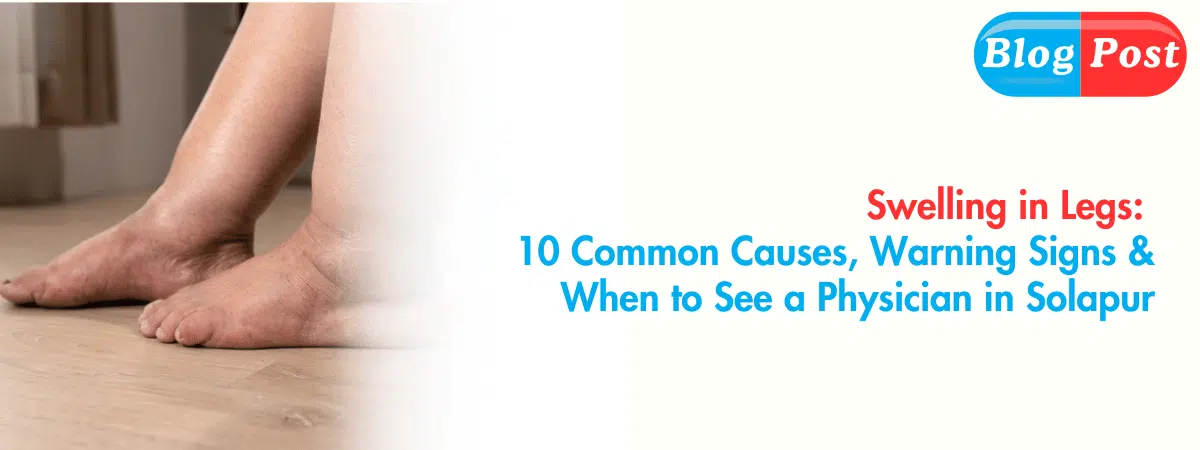
Leg swelling, medically known as peripheral edema, occurs when excess fluid collects in the tissues of your feet, ankles, or legs.
This fluid buildup may affect:
- One foot
- One leg
- Both legs
- Ankles
- Lower legs
- Entire leg
Some people experience swelling only in the evening, while others wake up with swollen feet every morning. The pattern often provides important clues about the underlying cause.
Swelling itself is not a disease. Instead, it is a symptom that may point to a variety of medical conditions. Identifying the exact reason is essential because treatment depends on the underlying cause.
Why You Should Never Ignore Persistent Leg Swelling
Occasional mild swelling after prolonged standing, traveling, or exercising may improve with rest and elevation.
However, persistent swelling may indicate conditions such as:
- Heart failure
- Kidney disease
- Liver disease
- Deep vein thrombosis (DVT)
- Poor blood circulation
- Severe infection
- Medication side effects
- Hormonal disorders
Ignoring these conditions can lead to complications, especially if swelling is accompanied by symptoms such as chest pain, breathlessness, fever, or sudden pain in one leg.
If leg swelling develops along with difficulty breathing, it could indicate fluid buildup due to heart or lung problems. Learn more about recognizing breathlessness and when it becomes a medical emergency in this related article:
Similarly, if swelling occurs in people with long-standing diabetes, it should not be ignored because diabetes can affect the kidneys, heart, blood vessels, and nerves. Read more about warning signs of uncontrolled diabetes here:
How Does Swelling Develop?
Your body’s blood vessels continuously move fluid between the bloodstream and surrounding tissues.
Normally, excess fluid returns to the bloodstream through veins and lymphatic vessels.
Swelling develops when this balance is disturbed due to:
- Increased pressure inside blood vessels
- Leakage of fluid into tissues
- Poor blood circulation
- Kidney problems causing salt and water retention
- Reduced protein levels in the blood
- Blocked lymphatic drainage
- Certain medications
This is why treating the symptom alone is often not enough. Finding the underlying cause is the key to effective care.
10 Common Causes of Swelling in Legs
1. Chronic Venous Insufficiency (Weak Leg Veins)
One of the most common swelling in legs causes is chronic venous insufficiency, a condition in which the veins in the legs have difficulty sending blood back toward the heart.
Normally, tiny valves inside the veins prevent blood from flowing backward. When these valves weaken or become damaged, blood pools in the lower legs, leading to increased pressure and fluid leakage into the surrounding tissues.
Common Symptoms
- Swelling that worsens by evening
- Aching or heaviness in the legs
- Visible varicose veins
- Itchy skin around the ankles
- Skin discoloration
- Leg cramps
- Swelling that improves after elevating the legs
Who Is at Risk?
- People over 50 years of age
- Individuals who stand for long hours
- Obesity
- Pregnancy
- Family history of varicose veins
Early evaluation can help prevent complications such as skin ulcers or chronic discomfort.
2. Heart Failure
The heart pumps blood throughout the body. When it becomes weaker and cannot pump efficiently, blood may back up in the veins, causing fluid to accumulate in the legs, ankles, and feet.
Heart failure does not mean the heart has stopped working. It means that its pumping ability is reduced.
Symptoms
- Swelling in both legs
- Breathlessness during walking
- Difficulty lying flat due to shortness of breath
- Fatigue
- Rapid weight gain from fluid retention
- Reduced exercise tolerance
Because swelling due to heart failure can become serious, it should never be ignored.
Patients experiencing swelling along with breathlessness or chest discomfort should seek medical evaluation promptly.
Dr. Vinod Ban also provides care for patients with heart-related critical illnesses through Cardiac Shock & Heart Failure Management, where appropriate clinical evaluation and management are offered based on each patient’s condition.
3. Kidney Disease
Healthy kidneys remove excess water and waste products from the body.
When kidney function declines, the body begins to retain salt and water, resulting in swelling of the feet, ankles, legs, and sometimes even the face.
Leg swelling may be one of the earliest signs of kidney disease, especially in people with diabetes or high blood pressure.
Common Symptoms
- Puffy feet
- Swollen ankles
- Morning facial swelling
- Reduced urine output
- High blood pressure
- Persistent tiredness
- Loss of appetite
Kidney disease often develops gradually and may not cause pain in the early stages. Prompt medical evaluation can help identify the cause and guide appropriate treatment.
You may also find it helpful to read about Acute Kidney Injury: Warning Signs Your Kidneys May Be Failing:
4. Liver Disease
The liver produces proteins that help keep fluid inside blood vessels.
When the liver is damaged due to conditions such as cirrhosis or chronic liver disease, protein production decreases. As a result, fluid leaks into surrounding tissues, causing swelling in the legs and sometimes fluid accumulation in the abdomen.
Symptoms
- Swollen feet
- Enlarged abdomen
- Yellowing of the skin or eyes (jaundice)
- Fatigue
- Poor appetite
- Easy bruising
Patients with liver disease require comprehensive evaluation because swelling may indicate advanced disease or complications.
5. Deep Vein Thrombosis (DVT)
One of the most important and potentially dangerous swelling in legs causes is Deep Vein Thrombosis (DVT).
DVT occurs when a blood clot forms in one of the deep veins, usually in the calf or thigh.
Unlike swelling caused by fluid retention, DVT often affects only one leg and requires urgent medical attention because the clot can travel to the lungs, leading to a life-threatening condition called a pulmonary embolism.
Warning Signs
- Swelling in one leg only
- Sudden calf pain
- Warm skin over the affected area
- Redness or discoloration
- Tenderness while walking
- Swelling that develops suddenly
Risk Factors
- Recent surgery
- Long-distance travel
- Bed rest
- Cancer
- Pregnancy
- Smoking
- Certain blood clotting disorders
If you notice sudden swelling in one leg accompanied by pain, warmth, or redness, seek immediate medical care instead of trying home remedies.
6. Lymphedema (Blocked Lymphatic Drainage)
Apart from blood vessels, your body also has a lymphatic system that helps remove excess fluid from tissues and supports the immune system.
When these lymphatic vessels become blocked or damaged, fluid cannot drain properly, resulting in lymphedema.
Unlike ordinary swelling, lymphedema often becomes chronic if left untreated.
Common Symptoms
- Persistent swelling in one or both legs
- A feeling of heaviness or tightness
- Tight or thickened skin
- Difficulty wearing shoes or socks
- Reduced flexibility around the ankle or knee
- Frequent skin infections in the affected area
Common Causes
- Previous surgery
- Radiation therapy
- Certain infections
- Congenital (present from birth) lymphatic abnormalities
- Rarely, cancer affecting the lymphatic system
Early diagnosis can help reduce symptoms and improve quality of life.
7. Certain Medications
Sometimes, the cause of swollen legs is not a disease but a side effect of medication.
Certain medicines can cause the body to retain fluid or affect blood circulation, leading to swelling.
Medicines That May Cause Leg Swelling
- Blood pressure medicines (especially calcium channel blockers)
- Steroids
- Hormonal medicines
- Some diabetes medications
- Certain pain-relieving medicines (NSAIDs)
Never stop prescribed medication on your own. If you notice swelling after starting a new medicine, consult your physician. Your treatment plan may need adjustment.
8. Pregnancy
Swelling during pregnancy is common, particularly during the second and third trimesters.
As the baby grows, pressure on the pelvic veins slows blood flow from the legs, allowing fluid to collect around the ankles and feet.
Normal Pregnancy Swelling
- Swelling in both feet
- Worse in the evening
- Improves with leg elevation
- Usually painless
When Pregnancy Swelling Is Dangerous
Seek urgent medical care if swelling is associated with:
- High blood pressure
- Severe headache
- Blurred vision
- Sudden swelling of the face or hands
- Reduced fetal movement
- Severe abdominal pain
These symptoms may suggest preeclampsia, a serious pregnancy complication requiring immediate evaluation.
9. Infection (Cellulitis)
A skin or soft tissue infection, known as cellulitis, can cause swelling in one leg.
This condition occurs when bacteria enter through a cut, scratch, ulcer, or insect bite.
Symptoms
- Redness
- Warm skin
- Pain
- Fever
- Swelling in one leg
- Tenderness
- Sometimes pus formation
People with diabetes are more likely to develop severe infections.
If swelling is accompanied by fever or rapidly spreading redness, prompt medical evaluation is essential.
Patients with severe infections should also be aware of the warning signs of sepsis, a life-threatening condition that can develop when an infection spreads throughout the body. Read more in our guide on Sepsis Treatment in Solapur:
10. Hypothyroidism (Underactive Thyroid)
The thyroid gland produces hormones that regulate many body functions, including metabolism.
When the thyroid becomes underactive, fluid may accumulate in the tissues, causing swelling.
Symptoms
- Puffy face
- Swollen legs
- Weight gain
- Dry skin
- Feeling unusually cold
- Constipation
- Fatigue
- Slow heartbeat
Although thyroid-related swelling develops gradually, it should still be evaluated by a physician because treatment depends on correcting the hormone imbalance.
Common Symptoms That May Accompany Leg Swelling
Depending on the underlying cause, leg swelling may occur with one or more of the following symptoms:
- Puffy ankles or feet
- Tight or shiny skin
- Pain or discomfort
- Heaviness in the legs
- Difficulty walking
- Redness
- Warmth over the affected area
- Skin discoloration
- Leg cramps
- Shortness of breath
- Chest discomfort
- Fatigue
- Reduced urine output
- Sudden weight gain
- Fever
Not every symptom indicates a serious illness, but combinations of symptoms often provide important clues about the underlying condition.
Risk Factors for Leg Swelling
Certain factors increase the likelihood of developing persistent leg swelling.
These include:
- Increasing age
- Obesity
- Diabetes
- High blood pressure
- Heart disease
- Kidney disease
- Liver disease
- Pregnancy
- Long periods of standing or sitting
- Smoking
- Lack of physical activity
- Previous blood clots
- Varicose veins
- Certain medications
People with multiple risk factors should not ignore persistent swelling, even if it seems mild initially.
Warning Signs You Should Never Ignore
Although many cases of swelling are not emergencies, some situations require immediate medical attention.
Seek Emergency Care If You Have:
✓ Sudden swelling in one leg
Especially if accompanied by:
- Pain
- Warmth
- Redness
This could indicate Deep Vein Thrombosis (DVT).
✓ Swelling with Breathlessness
If swollen legs occur together with:
- Difficulty breathing
- Chest tightness
- Persistent cough
- Difficulty lying flat
It may suggest heart or lung problems requiring urgent evaluation.
If you are experiencing breathing difficulty, read our detailed guide on Breathlessness in Solapur – Causes, Symptoms & When to Seek Help:
✓ Swelling with Chest Pain
Leg swelling combined with chest pain may indicate a serious cardiovascular condition.
Learn more about Chest Pain in Solapur: How to Know If It’s a Heart Emergency or Something Else:
✓ Swelling with Fever
Persistent swelling accompanied by fever may indicate:
- Severe infection
- Cellulitis
- Sepsis
Prompt medical evaluation is recommended.
✓ Swelling with Reduced Urination
This may suggest kidney dysfunction, especially if accompanied by:
- Puffiness around the eyes
- Fatigue
- High blood pressure
✓ Sudden Weight Gain
Rapid weight gain over a few days may indicate fluid retention due to:
- Heart failure
- Kidney disease
- Liver disease
✓ Severe Pain
Painful swelling should never be ignored because it may indicate:
- Blood clot
- Infection
- Injury
- Compartment syndrome (rare but serious)
How Doctors Diagnose the Cause of Leg Swelling
Because leg swelling has many possible causes, identifying the underlying problem is the most important step before starting treatment.
During your consultation, the physician will carefully review your symptoms, medical history, medications, and perform a physical examination.
Depending on your condition, additional investigations may be recommended.
Common Diagnostic Tests
| Test | Why It Is Done |
| Physical examination | Checks the pattern, severity, and location of swelling |
| Blood tests | Evaluates kidney, liver, thyroid function, infection, and protein levels |
| Urine test | Detects kidney disease or protein loss |
| ECG | Assesses heart rhythm and heart-related problems |
| Echocardiography | Evaluates heart pumping function |
| Doppler ultrasound | Detects blood clots and assesses blood flow in leg veins |
| Chest X-ray | Helps identify heart enlargement or lung fluid |
| Kidney ultrasound | Evaluates kidney structure and obstruction |
| Liver function tests | Looks for liver-related causes of swelling |
The choice of investigations depends on each patient’s symptoms and clinical findings. Not everyone will require every test.
Can Leg Swelling Be Prevented?
Some causes cannot be prevented, but many cases of leg swelling can be reduced by adopting healthy habits.
Practical Prevention Tips
- Stay physically active.
- Avoid sitting or standing in one position for long periods.
- Elevate your legs whenever possible.
- Maintain a healthy body weight.
- Limit excessive salt intake.
- Stay well hydrated.
- Wear properly fitted footwear.
- Manage diabetes, blood pressure, and cholesterol.
- Take medications exactly as prescribed.
- Attend regular health check-ups if you have heart, kidney, or liver disease.
Patients with chronic illnesses can also benefit from comprehensive General Medicine & Lifestyle Disease Management to control conditions that contribute to swelling:
Swollen Feet Treatment: How Is Leg Swelling Managed?
The right swollen feet treatment depends entirely on what is causing the swelling. Since leg swelling is a symptom rather than a disease, identifying the underlying problem is the first and most important step.
Some people may improve with lifestyle changes, while others may require medications or treatment for conditions affecting the heart, kidneys, liver, veins, or lymphatic system.
Lifestyle Measures That May Help
For mild swelling that is not caused by a serious medical condition, your physician may recommend:
- Elevating your legs above heart level when resting
- Walking regularly to improve circulation
- Avoiding prolonged standing or sitting
- Maintaining a healthy body weight
- Reducing excess salt in your diet
- Drinking enough water unless advised otherwise
- Wearing properly fitted footwear
- Using compression stockings if recommended by your doctor
Do not use compression stockings if you have severe circulation problems unless your doctor advises you to do so.
Medications
Depending on the diagnosis, treatment may include:
- Medicines to reduce excess fluid when appropriate
- Treatment for heart disease
- Medicines to control blood pressure
- Diabetes management
- Antibiotics for bacterial infections
- Blood thinners for deep vein thrombosis (DVT)
- Thyroid hormone replacement for hypothyroidism
Never start or stop medicines without consulting your physician.
Treatment for Heart-Related Swelling
If swelling is caused by heart failure or reduced heart function, treatment focuses on improving heart performance and reducing fluid overload.
Patients with advanced heart conditions may require specialized evaluation and management. Learn more about Cardiac Shock & Heart Failure Management on Dr. Vinod Ban’s website:
Treatment for Kidney-Related Swelling
When kidney disease causes fluid retention, treatment depends on the stage and underlying cause.
Management may include:
- Blood pressure control
- Diabetes management
- Dietary modifications
- Medicines to reduce fluid retention when appropriate
- Monitoring kidney function
Read more about Renal & Nephro Critical Care:
Treatment for Liver Disease
Patients with liver disease may require:
- Dietary advice
- Medicines as appropriate
- Monitoring liver function
- Treatment of the underlying liver condition
More information is available on Gastrointestinal & Liver Critical Care:
Treatment for Severe Infection
When swelling occurs because of cellulitis or a severe infection, prompt treatment is essential.
Depending on the severity, care may include:
- Antibiotics
- Wound care
- Blood tests
- Hospital admission if required
Patients with widespread infection may require specialized Sepsis & Septic Shock Treatment:
When Should You See a Leg Swelling Doctor in Solapur?
Many people delay seeking medical advice, hoping the swelling will go away on its own. While mild swelling after prolonged standing may improve with rest, persistent or worsening swelling should be evaluated.
Consider consulting a Leg Swelling Doctor in Solapur if:
- Swelling lasts for more than a few days
- One leg is significantly more swollen than the other
- Swelling keeps returning
- You develop pain, redness, or warmth in the leg
- Your shoes suddenly become tight without an obvious reason
- You have diabetes, heart disease, kidney disease, or liver disease
- Swelling is associated with breathlessness, chest pain, or reduced urine output
Early diagnosis often helps identify treatable conditions before complications develop.
Why Choose Dr. Vinod Ban?
Dr. Vinod Ban is a Senior Physician and Critical Care Specialist with extensive experience in diagnosing and managing a wide range of acute and chronic medical conditions.
Patients from Solapur, Akkalkot, Pandharpur, Tuljapur, Barshi, Osmanabad, Latur, Kurduwadi, Vijayapura, and nearby regions consult him for comprehensive medical evaluation and evidence-based treatment.
Areas of Expertise Include:
- General Internal Medicine
- Lifestyle Disease Management
- Critical Care Medicine
- Diabetes Management
- Heart Failure Management
- Kidney Disorders
- Severe Infections
- Respiratory Illnesses
- Multi-Organ Critical Care
He consults at:
Yashodhara Super Speciality Hospital – Unit 2
Hyderabad Road, Near Market Yard, Solapur
Conclusion
Swelling in the legs is a symptom that should not be dismissed, particularly when it is persistent, painful, or associated with symptoms such as breathlessness, chest pain, fever, or reduced urine output. While some cases are related to prolonged standing or temporary fluid retention, others may indicate conditions affecting the heart, kidneys, liver, veins, or lymphatic system.
A timely medical evaluation helps identify the underlying cause and allows treatment to begin before complications develop. If you or a family member has ongoing leg swelling, seeking professional advice is the safest approach.
Book an Appointment with Dr. Vinod Ban
If you have persistent leg swelling or are concerned about symptoms such as swollen feet, breathlessness, or unexplained fluid retention, schedule a consultation with Dr. Vinod Ban, Senior Physician & Critical Care Specialist.
Clinic:
Yashodhara Super Speciality Hospital – Unit 2
Hyderabad Road, Near Market Yard, Solapur
Phone: 87999 17271
FAQs
1. What is the most common cause of leg swelling?
Ans: Common causes include prolonged standing, venous insufficiency, heart disease, kidney disease, medications, pregnancy, and infections.
2. Is swelling in one leg more serious than swelling in both legs?
Ans: Swelling affecting only one leg—especially if it is sudden, painful, warm, or red—may indicate a blood clot and should be evaluated urgently.
3. Can diabetes cause swollen feet?
Ans: Yes. Diabetes can contribute to swelling through kidney disease, heart disease, poor circulation, infections, and nerve damage.
4. Can high blood pressure cause leg swelling?
Ans: High blood pressure itself may not directly cause swelling, but heart or kidney problems associated with it can.
5. Does kidney disease cause swollen legs?
Ans: Yes. Reduced kidney function can lead to fluid retention, causing swelling in the feet and legs.
6. Can heart problems cause swollen feet?
Ans: Yes. Heart failure commonly causes swelling in both legs due to fluid accumulation.
7. Should I massage swollen legs?
Ans: Not always. If swelling is due to a blood clot or infection, massage may be harmful. Consult your physician before trying massage.
8. Can dehydration cause leg swelling?
Ans: Although dehydration usually reduces body fluid, it can indirectly contribute to fluid balance problems in some medical conditions. Persistent swelling requires medical evaluation.
9. Are swollen legs always dangerous?
Ans: No. Many cases are not serious, but persistent, painful, or sudden swelling should never be ignored.
10. Which doctor should I consult for leg swelling?
Ans: A physician can evaluate the underlying cause and guide appropriate investigations and treatment. Additional specialist referral may be recommended if required.
